NIL and College Athlete Revenue Sharing: What Student-Athletes Need to Know About Getting Paid
Share this on:


Find your perfect college degree
In this article, we will be covering...
College athletes have more opportunities to earn money from their athletic reputations than they did a decade ago. Through name, image, and likeness (NIL) agreements, student-athletes can earn compensation from endorsements, social media promotions, autograph signings, appearances, and other commercial activities.
College sports compensation has also entered a new phase. Following the House v. NCAA settlement, participating NCAA Division I schools can provide direct payments and additional benefits to student-athletes through revenue-sharing arrangements. These school payments operate alongside third-party NIL deals, athletic scholarships, and other permitted benefits.
For student-athletes, understanding the differences between these payment sources is essential. The rules governing eligibility, reporting, contracts, and taxes can affect how much money an athlete ultimately keeps and whether an agreement complies with applicable requirements.
This guide explains how NIL and college athlete revenue sharing work, who may receive compensation, what NCAA rules require, and how students can protect their financial and academic interests.
What Is NIL in College Sports?
NIL stands for name, image, and likeness. It refers to the rights associated with an individual’s identity that can be used for commercial purposes.
In college sports, NIL allows student-athletes to earn compensation when a business, organization, or individual uses their identity to promote products, services, events, or other commercial activities, subject to applicable rules.
For example, a student-athlete might receive payment for:
- Promoting a local restaurant on social media.
- Appearing in an advertisement for a sports apparel brand.
- Signing autographs at a paid event.
- Participating in a sponsored community appearance.
- Licensing their name or image for merchandise.
- Creating promotional content for a business.
NIL compensation may include money, products, services, or other agreed-upon benefits. The value and terms depend on the arrangement.
The NCAA’s NIL guidance distinguishes legitimate commercial arrangements from payments that are effectively made simply for athletic participation or achievement. Under the current Division I framework, third-party deals are subject to applicable requirements involving business purpose, compensation, and reporting.
Student-athletes should review the NCAA’s official NIL guidance to understand the rules that apply to their circumstances.
What Is College Athlete Revenue Sharing?
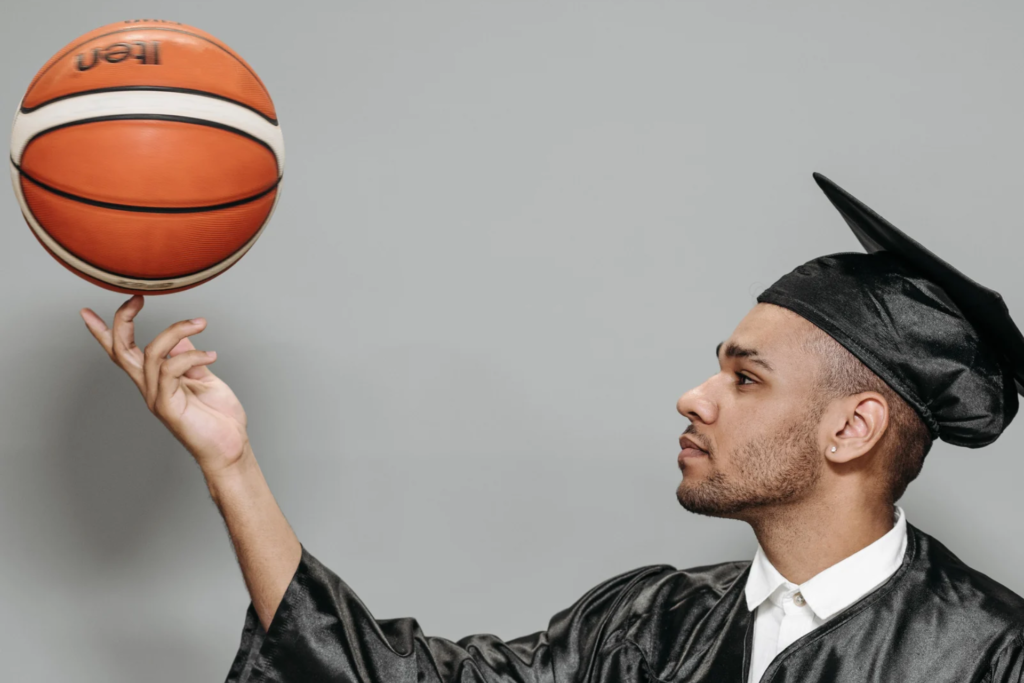
College athlete revenue sharing refers to direct payments and certain additional benefits that participating colleges and universities may provide to their student-athletes under the framework established by the House v. NCAA settlement.
The settlement received final approval in June 2025, with the new system taking effect on July 1, 2025. It allows participating NCAA Division I institutions to compensate student-athletes directly within an established annual benefits cap.
This represents a significant development in college sports. Previously, NCAA restrictions generally prevented schools from paying athletes directly in the same manner permitted under the settlement.
How Does Revenue Sharing Work?
Participating Division I schools may distribute compensation among eligible student-athletes, subject to the applicable cap and other rules. Schools have discretion over whether to participate in the new payment framework and how to allocate their available funds.
The cap is not an individual athlete’s guaranteed payment. A school’s allocation decisions may vary by sport, roster, negotiated agreements, institutional resources, and other relevant considerations.
According to the College Sports Commission’s revenue-sharing guidance, the annual cap is calculated using a formula based on 22% of specified average revenues associated with major-conference schools.
For the 2026–27 academic year, the College Sports Commission estimates the cap at approximately $21.3 million per participating school. This is a school-level maximum, not a promise that every school will spend that amount or that any individual athlete will receive a particular share.
Who Can Receive Revenue-Sharing Payments?
Eligible student-athletes at participating Division I institutions may receive payments or benefits under their school’s revenue-sharing program, subject to applicable NCAA eligibility requirements and settlement rules.
The arrangement is not limited to football and men’s basketball. Schools may allocate available compensation across their athletic programs, although the amount and structure of payments can differ substantially.
Student-athletes should ask their athletic department whether the school participates, which payment arrangements are available, and what academic, enrollment, roster, or contractual conditions apply.
NIL Deals vs. College Athlete Revenue Sharing: What’s the Difference?
Although NIL deals and revenue-sharing payments can both compensate college athletes, they are not the same arrangement.
| Feature | Third-party NIL deals | School revenue sharing |
| Source of payment | Businesses, brands, individuals, and other qualifying third parties | Participating colleges and universities |
| Typical purpose | Commercial endorsements, promotions, appearances, or licensing | Direct compensation and benefits under the school’s revenue-sharing framework |
| Amount | Negotiated according to the deal and applicable rules | Determined by the school’s allocation decisions and applicable cap |
| Reporting | Qualifying Division I third-party deals must be reported through NIL Go | Participating schools report applicable payments through the College Athlete Payment System (CAPS) |
| Availability | Depends on market opportunities and applicable rules | Depends on school participation, available funds, eligibility, and institutional decisions |
An athlete may receive both third-party NIL income and school revenue-sharing payments, in addition to an athletic scholarship and other permitted benefits.
However, each arrangement has its own requirements. Athletes should not assume that a school payment automatically satisfies third-party reporting obligations or that every NIL agreement qualifies for approval.
How Much Money Can College Athletes Make?
There is no single amount that college athletes can expect to earn from NIL or revenue sharing.
Some athletes receive modest compensation for local promotions or occasional appearances. Others with substantial audiences, strong brand recognition, or valuable commercial opportunities may negotiate more lucrative agreements.
Revenue-sharing compensation also varies. Participating schools have different resources and allocation strategies, and the annual school-level cap does not establish a fixed payment for each athlete.
Several factors can influence earning potential:
- Sport and market visibility: Sports with large audiences and substantial commercial followings may offer more sponsorship opportunities.
- Audience and engagement: Brands may consider an athlete’s social media reach, audience demographics, and engagement.
- Individual reputation: Athletic accomplishments, public visibility, and personal branding can influence commercial value.
- Location and business relationships: Local companies may be interested in athletes who can reach their target customers.
- Contract obligations: The amount of work required, the duration of the agreement, exclusivity, and licensing rights can affect compensation.
- School resources and policies: Revenue-sharing availability depends on institutional participation and allocation decisions.
A large social media following does not guarantee a lucrative NIL deal. Businesses may evaluate whether an athlete’s audience aligns with their marketing goals, while schools determine their own revenue-sharing allocations within the applicable framework.
Students should evaluate compensation based on the actual agreement rather than relying on headlines about high-profile athletes.
What Are the Current NCAA NIL Rules?
NCAA NIL requirements have evolved, particularly following the House v. NCAA settlement. Student-athletes should confirm the latest rules with their institution and the College Sports Commission before signing an agreement.
The following requirements are particularly important for NCAA Division I athletes.
1. Report Qualifying Third-Party NIL Deals
Division I student-athletes must report third-party NIL contracts or payments worth $600 or more in aggregate through NIL Go, the reporting platform operated by the College Sports Commission.
Under current guidance, qualifying deals must generally be submitted within five business days after the agreement is executed or payment terms are agreed upon.
The threshold applies to the total value of qualifying arrangements, including relevant bonuses, contingencies, and royalties. Athletes should consult the current reporting instructions rather than assume that a deal falls below the threshold simply because an individual payment is small.
The reporting requirement applies even if an athlete’s school does not participate in revenue sharing.
See the College Sports Commission’s NIL reporting guidance for current instructions and exceptions.
2. Understand What Makes an NIL Deal Compliant
An NIL agreement must satisfy the applicable requirements. In particular, qualifying third-party arrangements must involve a valid business purpose, and compensation may be reviewed under applicable standards.
A legitimate agreement might require an athlete to create promotional content, attend an event, or endorse a product. A payment with no meaningful commercial purpose may raise compliance concerns.
Associated entities or individuals—those with qualifying relationships to an institution—may face additional scrutiny. Their agreements generally must demonstrate a valid business purpose involving goods or services offered to the public for profit, with compensation meeting applicable standards.
Athletes should retain the agreement, records of completed promotional work, payment details, and related communications.
3. Do Not Assume Pay-for-Play Is Permitted
The new revenue-sharing system allows participating schools to make certain direct payments to student-athletes. That does not mean every payment associated with college athletics is automatically permissible.
Third-party NIL arrangements must comply with the rules governing their purpose and structure. Student-athletes should be cautious about offers that promise compensation simply for enrolling at a particular school, participating in a competition, or achieving a specified athletic result when the arrangement violates applicable rules.
When a proposed deal appears connected to recruiting or retention, athletes should seek guidance from their compliance office and an independent adviser.
4. Follow School and Conference Requirements
Schools may have their own disclosure procedures, contract review processes, branding policies, and other requirements that operate alongside NCAA and College Sports Commission rules.
Conference-specific requirements may also apply.
Athletes should obtain written guidance about deadlines and approval procedures rather than relying solely on advice from teammates, social media, or prospective sponsors.
How Do Student-Athletes Receive NIL and Revenue-Sharing Payments?
The payment process depends on the type of arrangement.
For Third-Party NIL Deals
A typical process involves:
- Identifying a business or sponsor and negotiating the proposed agreement.
- Reviewing the contract, including the compensation and required deliverables.
- Submitting the agreement through NIL Go when required.
- Addressing any compliance questions or requested revisions.
- Completing the promotional work and documenting performance.
- Receiving payment according to the contract.
Under current Division I rules, qualifying third-party agreements must be reported through NIL Go, and athletes should verify whether the deal has been cleared before proceeding where clearance is required.
For School Revenue Sharing
Revenue-sharing arrangements are handled through the participating institution. The school determines its allocation structure, establishes the applicable contractual terms, and reports payments through the required system.
Student-athletes should request a written agreement that explains the amount, payment schedule, conditions, and circumstances under which payments may change or end.
They should also ask how transfers, changes in eligibility, injuries, withdrawal from school, or other events may affect the agreement.
Important: An athlete should never assume that an announced revenue-sharing budget represents money already allocated to them. The actual entitlement depends on the individual agreement and applicable rules.
Are NIL and Revenue-Sharing Payments Taxable?
Generally, yes. NIL earnings and revenue-sharing compensation can create federal, state, or other tax obligations, depending on the payment structure and the athlete’s circumstances.
Student-athletes should distinguish between taxable income and educational financial aid, because the tax treatment can differ.
What Taxes Might Apply?
Potential obligations include:
- Federal income tax.
- State or local income tax, where applicable.
- Self-employment tax for qualifying independent business activity.
- Estimated tax payments when required.
- Tax obligations arising from noncash compensation, such as products or services received in exchange for promotional work.
The correct treatment depends on how the income is classified, how the athlete is paid, applicable tax rules, and the individual’s circumstances.
How Can Student-Athletes Prepare?
Athletes should maintain a separate record of each deal, including the contract, invoices, payment dates, expenses, and any noncash compensation. Keeping funds available for taxes can help avoid financial problems when tax payments become due.
A qualified tax professional can help determine whether an athlete should make estimated payments, track deductible business expenses, or address tax questions involving payments received through a business entity.
Students should also remember that receiving a scholarship does not automatically make all other athletic income tax-free.
Can NIL Earnings Affect Scholarships or Financial Aid?
NIL income and revenue-sharing compensation do not automatically eliminate an athletic scholarship. However, students should understand the distinction between athletic aid, school compensation, and need-based financial aid.
The effect of additional income on financial aid depends on the relevant program, income-reporting rules, and the student’s circumstances.
Before signing a major NIL agreement or accepting substantial compensation, student-athletes should consult their financial aid office about any reporting obligations and possible implications for need-based assistance.
Athletes should also ask whether a proposed payment is classified as a scholarship, institutional benefit, revenue-sharing payment, or third-party NIL income. Those classifications can matter for both institutional compliance and tax purposes.
What Should Student-Athletes Look for in an NIL Contract?
An NIL contract can create binding obligations. Students should read the agreement carefully and seek qualified advice before signing, particularly when the contract involves exclusivity, licensing rights, or substantial compensation.
Important provisions include the following.
Compensation and Payment Schedule
The agreement should specify the amount of compensation, payment dates, and any conditions for receiving the money. Athletes should determine whether payment depends on completing particular tasks or meeting other contractual requirements.
Required Deliverables
The contract should clearly explain what the athlete must do, such as publishing posts, attending appearances, producing videos, or participating in promotional events.
Unclear obligations can lead to disputes over whether the athlete has earned the agreed compensation.
Exclusivity and Conflicts
Some agreements prevent athletes from promoting competing brands or working with certain businesses. Students should understand how these restrictions affect future opportunities and whether they conflict with existing agreements.
Use of Name, Image, and Likeness
The contract should explain where, how, and for how long the sponsor can use the athlete’s identity. Athletes should pay attention to licensing duration, permitted platforms, sublicensing, and whether the sponsor can continue using content after the agreement ends.
Termination and Dispute Resolution
Students should understand the circumstances under which either party can end the agreement and what happens to outstanding payments or licensed content.
They should also review provisions governing disputes, refunds, arbitration, and other remedies.
Transfer and Eligibility Conditions
Athletes should determine whether a transfer, loss of eligibility, withdrawal, or change in enrollment affects compensation. They should avoid assuming that every agreement will remain unchanged after a move to another institution.
For school revenue-sharing agreements, student-athletes should also ask whether the terms comply with applicable settlement requirements.
Independent Advice
An athlete may benefit from consulting a qualified attorney, tax professional, or experienced adviser. Students should be cautious about representatives who demand large upfront fees, guarantee unrealistic earnings, or pressure them to sign immediately.
How Can College Athletes Build Their NIL Value?
Athletes do not need to be national stars to explore legitimate commercial opportunities. A thoughtful approach to personal branding can help students connect with businesses whose audiences and values align with their own.
Develop a Professional Online Presence
Student-athletes should keep their public profiles accurate, professional, and consistent with their goals. They can highlight athletic achievements, academic interests, community involvement, and relevant personal interests without disclosing private information.
Identify Suitable Business Partners
Local restaurants, fitness businesses, community organizations, apparel companies, and other brands may seek partnerships with athletes who can reach their customers.
The best partnership is not necessarily the one with the highest advertised payment. Students should consider whether the business is reputable, the required work is reasonable, and the contract protects their interests.
Keep Records of Audience and Engagement
Athletes can monitor engagement, audience demographics, and content performance to help demonstrate their potential commercial value. Accurate information is more useful than inflated follower counts or unsupported promises about reach.
Protect Academic and Athletic Commitments
NIL work takes time. Students should estimate the hours required for content creation, appearances, meetings, and administration before accepting multiple agreements.
Academic progress, athletic obligations, and eligibility requirements remain important considerations.
What Happens If an NIL Deal Is Not Approved?
A deal submitted through NIL Go may be cleared, returned for revision, or not cleared, depending on the review and the information available.
If an agreement is returned for revision, the athlete may be able to modify and resubmit it. If it is not cleared, the student should review the stated reasons and available options, which may include cancellation or an appeal through the applicable process.
Athletes should not assume that they can proceed without consequences when a deal has not been cleared where clearance is required. Continuing with a noncompliant or unreported agreement may create enforcement risks, including potential eligibility consequences.
The appropriate response is to consult the institution’s compliance office, review the College Sports Commission’s instructions, and obtain independent legal advice when needed.
Frequently Asked Questions About NIL and College Athlete Revenue Sharing
Do all college athletes receive NIL money?
No. NIL rules allow student-athletes to pursue qualifying commercial opportunities, but businesses are not required to offer deals. Earnings depend on factors such as audience, market demand, sponsor interest, and the terms of each agreement.
Do all colleges pay athletes through revenue sharing?
No. NCAA Division I institutions may choose whether and how much to provide under the applicable framework. A school’s participation does not guarantee that every athlete will receive a payment.
Can student-athletes receive both NIL payments and revenue sharing?
Yes. Eligible athletes may receive third-party NIL earnings and school revenue-sharing payments, in addition to athletic scholarships and other permitted benefits. Each payment source remains subject to its own requirements.
Is there a maximum amount a college athlete can earn?
There is no single universal individual earnings cap covering every source of NIL income. The school-level revenue-sharing cap limits applicable institutional benefits at participating schools, while third-party NIL agreements are governed by separate rules, including applicable reporting and compensation requirements.
Do Division II and Division III athletes have NIL rights?
NIL opportunities are not limited to Division I. Student-athletes in other NCAA divisions may also pursue permissible NIL activities, subject to the rules applicable to their division, institution, and jurisdiction. The Division I revenue-sharing framework described in this article should not be assumed to apply to every division.
Do student-athletes have to report NIL deals worth less than $600?
The Division I NIL Go reporting requirement generally applies when qualifying third-party NIL deals reach $600 or more in aggregate. Smaller payments may count toward that threshold when combined with other applicable deals. Athletes should check current guidance and any additional institutional requirements.
Does receiving revenue-sharing money make a student-athlete an employee?
Receiving revenue-sharing compensation does not, by itself, establish that a student-athlete is an employee of the school. Employment status can depend on applicable law and the specific circumstances. Students should not assume that every athlete has the same legal classification.
Can an athlete lose eligibility because of an NIL deal?
Yes, eligibility consequences may arise when an athlete violates applicable rules, including reporting or clearance requirements. Athletes should submit qualifying deals on time, respond to compliance questions, and seek guidance before proceeding with a disputed arrangement.
Conclusion: Get Paid Without Overlooking the Rules
NIL and college athlete revenue sharing have expanded the ways student-athletes may earn compensation while pursuing a college education. Third-party endorsements allow athletes to monetize their names, images, and likenesses, while participating Division I schools can make direct payments under the post-House v. NCAA framework.
However, opportunities come with responsibilities. Athletes need to understand reporting requirements, review contracts carefully, account for taxes, and protect their academic and athletic eligibility.
The best starting point is to contact the school’s compliance office, request written information about available revenue-sharing arrangements, and review the current College Sports Commission and NCAA guidance before signing a deal.
With accurate information and careful planning, student-athletes can make better decisions about compensation while protecting their education, finances, and future opportunities.